

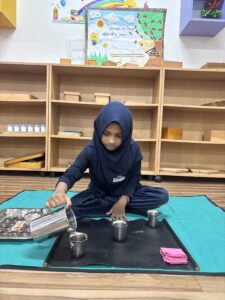
There’s a moment every parent recognises. Your child ties their shoelace for the first time, looks up at you, and their whole face changes — not because the shoelace matters, but because they just proved something to themselves. That flicker of “I did it” is where confidence actually comes from. Not from praise, not from trophies, but from small, repeated proof that they can figure things out.
The good news is you don’t need a curriculum for this. Confidence is built in the ordinary minutes of a day — the ones that don’t look like “learning” at all.
It Starts With Letting Them Struggle a Little
The instinct to jump in and fix things fast is strong, especially when you’re in a hurry. But when you tie the shoe, pour the juice, or zip the jacket every single time, you’re quietly telling your child, “I don’t think you can do this yet.” Stepping back — even when it’s slower, even when it’s messier — sends the opposite message. Give your child three extra minutes and a bit of your patience, and you’re handing them something far more valuable than the task itself.
Praise the Process, Not Just the Outcome
“You’re so smart” feels like a compliment, but it can quietly backfire — children who hear it a lot tend to avoid challenges later, afraid of losing the label. “You worke
d really hard on that puzzle, and you didn’t give up” points to something they can repeat on purpose. It teaches that effort, not innate talent, is what gets results. That’s a mindset that carries a child through every hard thing school will eventually throw at them.
Let Mistakes Be Boring, Not Dramatic
How you react to a spilled glass of water or a wrong answer teaches your child how to react to their own mistakes. A calm “oops, let’s clean it up” says mistakes are just part of doing things. A big reaction — even a worried one — can make a child start avoiding anything they might get wrong. Confidence isn’t the absence of mistakes; it’s not being afraid of them.
Give Them Real Responsibilities, Not Just Chores
There’s a difference between “clean your room because I said so” and “you’re in charge of watering the plants every morning.” The second one hands over ownership. Preschoolers rise surprisingly well to small, genuine responsibilities — setting the table, choosing their own outfit, feeding a pet. Each one is a quiet rehearsal for “I can be trusted with something that matters.”
Ask Their Opinion, Even When It’s Not Convenient
“Which route should we take home?” “What do you think we should make for dinner?” These tiny questions, asked often, teach a child that their thinking is worth something. It doesn’t mean every answer becomes the plan — it means their voice gets heard regularly enough that speaking up starts to feel normal, not scary.
Let Them Teach You Something
Ask your child to explain how their favourite game works, or how to build the tower they just made. Being the “expert” for two minutes, even about something small, is a surprisingly powerful confidence builder. It flips the usual dynamic and shows your child that they, too, have something worth sharing.
The Environment Around Them Matters Too
A lot of this confidence-building happens naturally at home, but it’s shaped just as much by how a child spends their hours away from you. A classroom that gives children real choices, encourages them to try before stepping in to help, and treats mistakes as part of learning builds on everything you’re doing at home rather than working against it. It’s a big part of why so many parents in Koramangala look closely at teaching style, not just curriculum, when they visit the best preschool in Koramangala.
The tone a school takes toward mistakes and effort matters just as much. A classroom where trying hard is celebrated as much as getting things right sends children home more willing to attempt new things on their own — something worth watching for on a school tour, and a quality several HBR Layout parents have specifically pointed to when researching the best preschool in HBR Layout.
Confidence Isn’t Built in a Day
There’s no single moment where a child “becomes” confident. It happens slowly, in a thousand small interactions — a shoelace tied alone, a mistake shrugged off, an opinion asked for and actually considered. If you’re comparing how different schools nurture this alongside academics, it’s worth seeing a classroom firsthand; families exploring their options nearby have found real value in visiting the best preschool in Bismillah Nagar to watch how children are encouraged to try, fail, and try again.
Give your child room to struggle a little, room to be heard, and room to get things wrong without drama. The confidence follows on its own.