

Somewhere between “just five more minutes” and the tenth request for the tablet, most parents start wondering if they’re getting this screen time thing wrong. You’re not alone, and there’s no need to panic. Screens aren’t the enemy — it’s more about how, when, and why they show up in your child’s day. A few small habits can turn screen time from a daily battle into something manageable, even genuinely useful.
Here’s a practical, judgment-free guide to healthy screen habits for the preschool years.
1. Set a Time, Not Just a Rule
“No more screen time” often leads to more arguments than it prevents. Instead, tell your child upfront: “You can watch for 20 minutes after lunch.” Knowing the boundary in advance, before the show even starts, makes the eventual “time’s up” far easier for a preschooler to accept, because it isn’t a surprise.
2. Watch Together When You Can
Co-viewing changes everything. When you sit with your child during a show, you can pause to ask questions, explain something confusing, or just react together to what’s happening. It turns a passive activity into a shared one, and it gives you a natural window into what your child is actually absorbing.
3. Choose Content That Does Something, Not Just Plays
Not all screen time is equal. A slow, narrative-driven show that encourages your child to guess, sing along, or answer questions builds far more than fast-cut, over-stimulating content designed purely to hold attention. If you’re unsure, watch five minutes yourself before deciding it’s a regular option.
4. Keep Screens Out of Meals and Bedtime
These two windows matter more than any other screen rule you’ll set. Screens during meals disrupt a child’s ability to notice hunger and fullness cues, and screens before bed make it harder to wind down, thanks to both the light and the stimulation. Keeping these two windows screen-free is a small habit with an outsized effect on sleep and eating.
5. Offer a Replacement, Not Just a “No”
Taking away a screen without offering something else usually leads to a meltdown, not because your child is being difficult, but because you’ve removed their activity without giving them a next step. Keep a small basket of go-to alternatives — blocks, crayons, a puzzle — so the transition has somewhere to land.
6. Model What You Want to See
Preschoolers notice everything, including how often you reach for your own phone. It’s hard to convince a child that screens are “only for a little while” if they see you scrolling through dinner. You don’t need to go screen-free yourself, just be aware of what your habits are quietly teaching.
7. Use Screens as a Tool, Not a Babysitter Default
There’s nothing wrong with using a show to get through a work call or a tough afternoon occasionally — that’s realistic parenting, not failure. The habit worth watching for is when screens become the automatic answer to boredom, rather than one option among many.
8. Talk About What They Watched
A quick “what was your favourite part?” after a show does more than you’d think. It turns screen time into a small language and memory exercise, and it also gives you insight into what’s landing with your child emotionally, especially with shows that touch on feelings or friendships.
9. Build a Predictable Daily Rhythm Around Screens
Children settle faster into routines that are consistent, not routines that are strict. If screen time always happens at roughly the same point in the day, your child stops testing the boundary every single time, because the pattern itself becomes familiar and expected.
Why the Rest of the Day Matters Just as Much
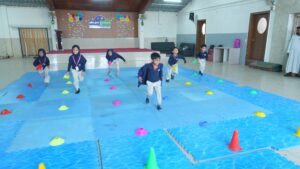
Screen habits don’t exist in isolation — they’re shaped by how much movement, play, and hands-on learning fill the rest of a child’s day. A preschooler who’s had plenty of active, engaging time at school is often far calmer and more flexible about screen limits at home, simply because they aren’t understimulated. This is one reason parents in Koramangala often ask specifically about how a school structures its day beyond academics, something reflected in the approach at the best preschool in Koramangala.
The same balance matters when it comes to language development. Children who get rich, face-to-face conversation and storytelling during school hours tend to need screens less as a source of stimulation at home. It’s worth asking how a school builds this in when you’re comparing options — families in HBR Layout often bring this up directly while touring the best preschool in HBR Layout.
At the end of the day, healthy screen habits aren’t about eliminating screens altogether — they’re about making sure screens are one small part of a full, active day rather than the centre of it. If you’re weighing how different preschools support that kind of balanced daily rhythm, it can help to see a classroom in person; many parents exploring nearby options have visited the best preschool in Bismillah Nagar to get a feel for how play, learning, and rest are woven through the day.
However you set your own limits, the goal is simple: screens as one part of a rich, varied childhood, not the whole of it.